
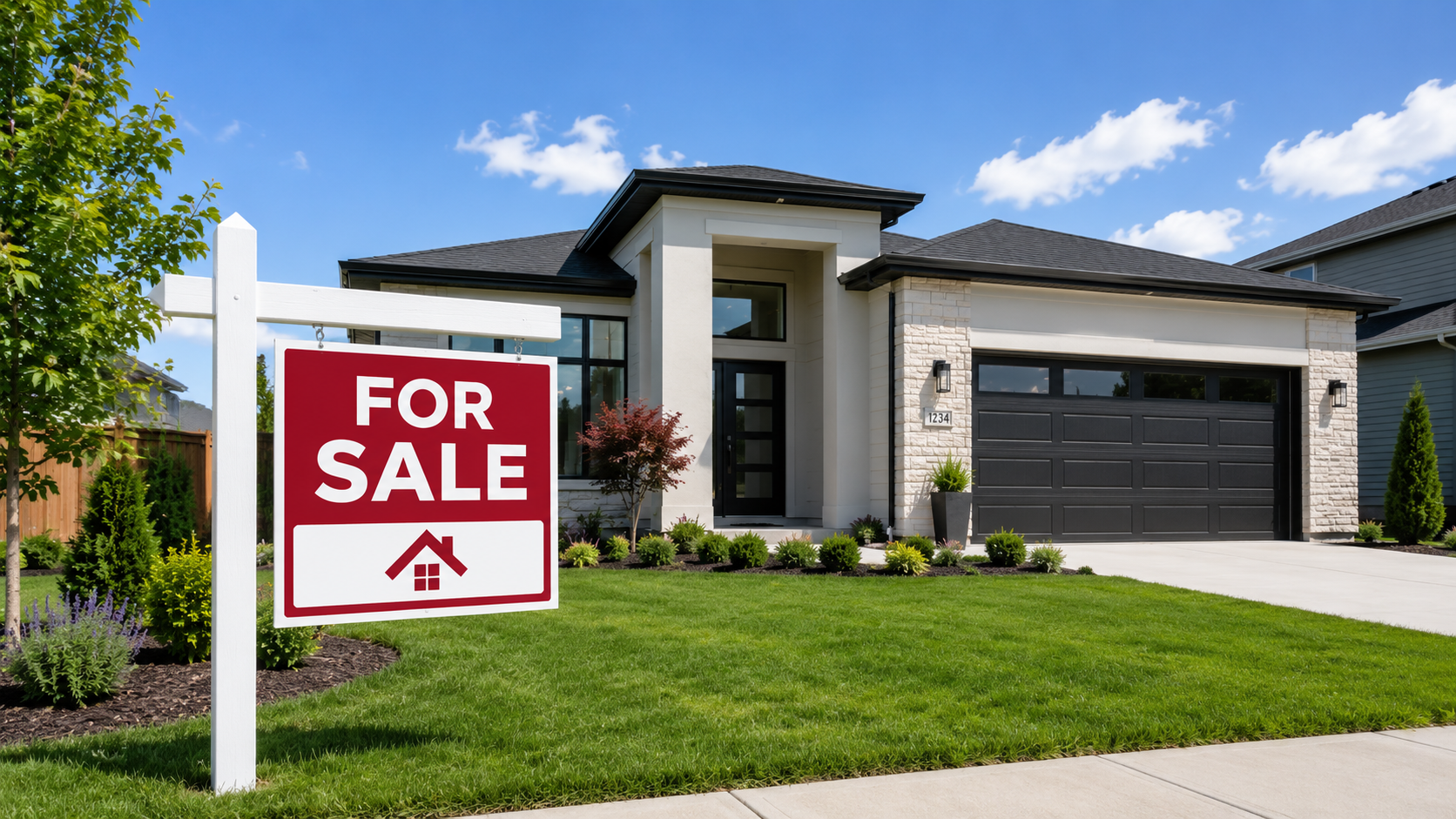
Selling a home without a realtor means handling pricing, marketing, paperwork, and closing yourself instead of paying an agent 2.5% to 3% to do it. In 2025, just 5% of US sellers went this route, an all-time low, while 91% used an agent (NAR, 2025 Profile of Home Buyers and Sellers). So is going it alone smart or a costly mistake? This guide walks you through every step, with the real numbers behind each decision.
Key Takeaways
- Only 5% of homes sold for sale by owner (FSBO) in 2025, a record low, while 91% of sellers used an agent (NAR, 2025).
- FSBO homes sold for a median $360,000 versus $425,000 for agent-assisted homes, a $65,000 gap.
- The average total commission is about 5.70%, so on a median-priced home you could keep roughly $11,600 to $23,000.
- The biggest FSBO hurdles, per sellers themselves: pricing right, prepping the home, and selling on time.
Selling without an agent is legal in every state, and thousands of owners do it every year. But the share keeps shrinking. Why would anyone pay tens of thousands in commission if they didn’t have to? The honest answer is that FSBO trades a big cash saving for a real workload and some genuine risk. The rest of this guide gives you the facts to decide, then the playbook to do it well.
How Much You Really Save Selling Without a Realtor
The average total real estate commission in 2026 is about 5.70%, split into roughly 2.88% for the listing agent and 2.82% for the buyer’s agent (Clever Real Estate, Average Real Estate Commission Rate, 2026). On the early-2026 median existing-home price near $400,000, that’s close to $23,000 in total fees. Skip the listing agent and you keep your half right away.
Here’s the part most “save 6%” headlines skip. You rarely keep the full commission. Sellers still commonly offer something to the buyer’s agent, because most buyers come with one. In fact, 88% of buyers purchased through an agent in 2025 (NAR, 2025). So the realistic FSBO saving is the listing side, roughly $11,600 on a median home, not the whole $23,000.
Where a 5.70% commission goes (median home ~$400,000) Listing agent 2.88% (~$11,500) Buyer’s agent 2.82% (~$11,300) Going FSBO removes the listing side. The buyer-agent side is negotiable but often still offered. Source: Clever Real Estate (2026); price basis US Census/NAR (early 2026).

Run the math on a real example. Say your home sells for $400,000. A full-service sale at 5.70% costs about $22,800 in commission. Go FSBO and offer the buyer’s agent 2.5%, and you pay $10,000, keeping roughly $12,800. Sell to an unrepresented buyer and offer nothing, and you keep the full $22,800. But you also take on every task an agent would have done, plus a few hundred dollars in flat-fee and title costs. We walk through every line item, including title, escrow, transfer taxes, and concessions, in our breakdown of the full cost to sell without a realtor.
But savings are only half the math. FSBO homes sold for a median of $360,000 in 2025, while agent-assisted homes sold for $425,000, a $65,000 difference (NAR, 2025). A quick note on the figures: NAR’s $360,000 and $425,000 track existing homes, while the Census median often quoted in headlines covers new construction, so the series differ. The gap also partly reflects that FSBO homes skew lower-priced and rural, and that many FSBO sellers already know their buyer, often a friend, relative, or neighbor. Still, it’s the central tension of every FSBO decision.
The honest tradeoff: Compare what you save against what you might leave on the table. A median FSBO saves around $11,600 in listing commission but sits inside a $65,000 price gap. If your local market is hot and your home is broadly appealing, that gap shrinks. If it’s niche or slow, an agent’s reach may earn back their fee.
Whether the trade favors you depends on your home, your market, and your time. We compare the two paths side by side, with break-even math, in FSBO vs. realtor. And because the buyer-agent question trips up almost everyone, we cover when and whether you owe a buyer’s agent commission in its own guide.
What the 2024 commission rules changed
A major rule change took effect on August 17, 2024. Under the NAR settlement, sellers no longer automatically owe both agents’ commissions, buyer-agent pay can’t be advertised on the MLS, and buyers must sign a written representation agreement before touring (NAR, Settlement FAQs, 2024). In theory that should have cut buyer-agent fees. In practice it barely moved them, from 2.35% in August 2024 to 2.34% that October (Redfin data via Kiplinger, 2024).
For a FSBO seller, the practical upshot is simple. You decide what, if anything, to offer a buyer’s agent, and you state it in your listing terms and the purchase contract rather than on the MLS. Many sellers still offer a competitive buyer-agent fee to keep their home on agents’ radar. Others offer less and let the price reflect the savings. Either way, the choice is now explicitly yours.
Pricing a Home Without an Agent
Pricing is the single hardest FSBO task, and sellers say so themselves: getting the price right tops the list of reported FSBO difficulties (NAR, 2025). Price too high and the listing goes stale; price too low and you hand a stranger your equity. The fix is evidence, not gut feel: study what comparable homes actually sold for in the last 90 days, then position yours honestly.
Start with recent sales, not active listings. Active listings show what sellers hope to get; closed sales show what buyers actually paid. Pull three to six homes near yours, similar in size, age, and condition, sold within the past three months. Then adjust for differences. This is the same process agents follow, and you can run a comparative market analysis yourself with free public data and a spreadsheet.

Here’s a simplified worked example. Suppose a near-identical home two streets over sold for $410,000 last month. Yours has a renovated kitchen worth about +$15,000, but the comp has a finished basement yours lacks, worth about -$20,000, and 150 more square feet at roughly $200 per foot, about -$30,000. Net adjustment: $410,000 + $15,000 – $20,000 – $30,000 = $375,000. Repeat across three or four comps, then weight the closest matches most heavily. The cluster of adjusted numbers, not any single one, is your price range.
Most FSBO mispricing comes from anchoring to one number you heard, a neighbor’s sale, an old Zestimate, or what you “need” to clear. Buyers don’t care what you need. They compare your home to every other option in their budget. Our step-by-step approach to price your home to sell shows how to set a number that draws offers in the first two weeks, when buyer attention peaks.
Do you need a professional appraisal before listing? Usually no, but sometimes yes, especially for unique homes with few comparables or when you expect a cash buyer who won’t trigger a lender’s appraisal. A pre-listing appraisal costs a few hundred dollars and gives you a defensible number you can show skeptical buyers. We explain when the spend is worth it in do you need an appraisal for an FSBO sale.
How Do You List and Market a For Sale By Owner Home?
The biggest myth about FSBO is that you can’t reach serious buyers. You can. A flat-fee MLS service puts your home on the same Multiple Listing Service agents use, which then syndicates to Zillow, Realtor.com, and Homes.com, for a one-time fee instead of a percentage (HomeLight, Flat Fee MLS Listing). That single step closes most of the visibility gap between FSBO and agent listings.
Median sale price, 2025: FSBO vs. agent-assisted FSBO $360,000 Agent $425,000 Gap: $65,000 (~18%) FSBO homes skew lower-priced and rural; many FSBO sellers already know the buyer. Source: NAR, 2025 Profile of Home Buyers and Sellers.
Source: National Association of Realtors, 2025 Profile of Home Buyers and Sellers.
Once you’re listed, marketing is about presentation and reach. Professional-grade photos matter more than anything else you’ll do online, because the photo is the click. Buyers scroll past dim, cluttered listings in under a second. Bright, wide, well-staged shots and a description that leads with the home’s best features earn saves and showings. We cover what works in listing photos and description, including a shot list and a description template.
According to NAR, FSBO sellers cite preparing and fixing up the home as one of their top three difficulties (NAR, 2025). Decluttering, minor repairs, and a deep clean routinely return more than they cost. Beyond the MLS, you’ll want a yard sign, social posts, and an open house. Our complete playbook to market a for sale by owner home sequences these so your launch hits while the listing is fresh.

Which marketing channel earns the buyer? For most FSBO sales, it’s the MLS syndication feeding the big portals. That’s why skipping a flat-fee MLS listing service is the most expensive shortcut a seller can take. A few hundred dollars there often returns thousands at the offer table. Time your launch for a Thursday so the listing is fresh for weekend searches, and respond to every inquiry within hours, not days.
What Paperwork and Legal Steps Does FSBO Require?
Paperwork is where FSBO sellers feel least confident, and it’s the area with real legal exposure. The documents fall into three phases. Before listing: the seller’s disclosure, any HOA documents, and a property survey if you have one. At offer and contract: the purchase agreement, counteroffers, and contingency addenda. At closing: the deed, the settlement statement, the bill of sale for personal property, and any required affidavits. Our checklist of every for sale by owner paperwork item keeps you from finding out at the closing table.
Disclosure law deserves special care. Nearly every state requires sellers to disclose known material defects, and failing to do so can expose you to liability even after closing (Nolo, Failure to Disclose Lawsuits). Rules vary widely by state, from comprehensive disclosure forms to limited “buyer beware” regimes, plus the federal lead-paint rule for any home built before 1978. We map the state-by-state seller disclosure requirements so you disclose correctly the first time.
According to the National Association of Realtors, the share of homes sold without an agent fell to a record-low 5% in 2025, down from a previous low of 7%, while 91% of sellers used an agent (NAR, 2025). The rising complexity of disclosures and the 2024 commission rules are part of why fewer owners attempt FSBO alone.
The purchase agreement is the contract that binds the sale, covering price, contingencies, timelines, and what stays with the home. Many states offer standard fill-in forms, and title companies often supply them. Get a contingency or deadline wrong and you could lose leverage or the deal. Our walkthrough of how to write a purchase agreement explains each clause in plain language, from earnest money to the inspection window.
Do you need a lawyer? In about 20 states, often called attorney-closing or attorney-review states, a real estate attorney must be involved in the closing. Elsewhere it’s optional but frequently worth a few hundred dollars for a contract review, especially on your first FSBO. We list which states require one, and when to hire one even if it’s optional, in real estate attorney requirements for FSBO.
How Do You Negotiate Offers and Close the Sale?
When offers arrive, your job shifts from marketer to negotiator. The headline price is only one term. Contingencies, closing date, who pays which costs, and the size of the earnest money deposit all affect what you actually net. A clean all-cash offer at a slightly lower price can beat a higher financed offer that risks falling through at appraisal. We break down how to read and counter offers in our guide to negotiate offers without an agent.
A useful habit: respond to every offer in writing, even a rejection, and keep emotion out of it. Buyers test FSBO sellers because they assume you’re unrepresented and anxious. Calm, evidence-based counters, “here are three comparable sales supporting our price,” hold value better than a defensive reaction. Set your walk-away number before the first offer lands, and don’t reveal it.
Once you accept an offer, closing runs on a predictable timeline, usually 30 to 45 days for a financed sale. Week one: open escrow with a title company and deposit earnest money. Weeks one to two: the buyer’s inspection, followed by any repair negotiation. Weeks two to four: the lender orders the appraisal and finalizes underwriting, while the title company runs a title search and clears any liens. Final days: the buyer does a walkthrough, both sides sign, funds transfer, and the deed records. A title or escrow company typically manages the money and documents, even in a FSBO sale. Our step-by-step FSBO closing process shows exactly who does what and when, so nothing slips between contract and keys.
When FSBO Makes Sense, and When It Doesn’t
FSBO works best under specific conditions: a desirable home in an active market, a flexible schedule, and either a buyer already in hand or comfort with marketing and negotiation. Many FSBO sellers already know their buyer, often a friend, relative, or neighbor (NAR, 2025). If a friend, tenant, or neighbor wants your home, FSBO is an easy win and the savings are nearly pure profit.
It works worst when you’re time-strapped, the home is hard to price, or you’re uneasy with contracts and negotiation. The $65,000 median price gap is a warning, not a verdict; much of it reflects home mix, not seller skill. Go in clear-eyed: budget for a flat-fee MLS listing, a title company, and possibly an attorney, and you’ve recreated most of an agent’s toolkit at a fraction of the cost. If you stall on pricing or marketing, you can still list with an agent later, but you’ll have lost weeks of fresh-listing momentum.
Thinking about selling FSBO? Start with the two decisions that drive everything else: set an evidence-based price, then get on the MLS. Work through this guide’s linked steps in order, and you’ll have an offer-ready listing without paying a full commission.
Frequently Asked Questions
How much do you save selling a house without a realtor?
You save the listing-side commission, about 2.88% on average, or roughly $11,600 on a median-priced US home (Clever Real Estate, 2026). If you also avoid offering a buyer-agent fee, total savings can approach 5.70%, near $23,000 on a $400,000 home. Most FSBO sellers still offer something to the buyer’s agent.
Do FSBO homes sell for less than agent-listed homes?
Yes, on average. FSBO homes sold for a median $360,000 in 2025 versus $425,000 for agent-assisted homes, a $65,000 gap (NAR, 2025). Much of that gap reflects that FSBO homes skew lower-priced and rural, and that many FSBO sellers already know their buyer, rather than pure pricing skill.
Is it legal to sell your house without a realtor?
Yes. Selling your home yourself is legal in all 50 states, and 5% of US sellers did so in 2025 (NAR, 2025). However, about 20 states require a real estate attorney to handle the closing, and every state has disclosure laws you must follow. Check your state’s rules before listing.
Can I list my FSBO home on the MLS and Zillow?
Yes, through a flat-fee MLS service. For a one-time fee, your listing enters the same MLS agents use, which syndicates to Zillow, Realtor.com, and Homes.com (HomeLight). This is the most effective way to reach the buyers and buyer agents who otherwise might never see a FSBO listing.
What’s the hardest part of selling a home without a realtor?
FSBO sellers most often cite getting the price right, preparing the home for sale, and selling within their planned timeframe (NAR, 2025). Pricing is the highest-stakes task, because an overpriced listing goes stale while an underpriced one leaves equity on the table. Strong comparable-sales research solves most of it.
Conclusion
Selling a home without a realtor is a real, legal path to keeping tens of thousands of dollars, but it rewards preparation over hope. The data is clear: FSBO is now a record-low 5% of sales and carries a median price gap, yet much of that gap reflects which homes go FSBO, not a penalty for doing it yourself.
Win by working the fundamentals in order. Price with evidence, get on the MLS, present the home well, handle disclosures and contracts carefully, and lean on a title company or attorney at closing. Do that, and you capture most of an agent’s value at a fraction of the cost. Start with what you’ll actually spend in our full cost to sell without a realtor breakdown, then price your home and list it.
Looking for your dream home in Texas? Let Win Nguyen Real Estate Group guide you every step of the way. Reach out to us today at winnguyengroup.com or call (346) 226 6688.
Win Nguyen Group: Your Trusted Partner in Texas Real Estate.


